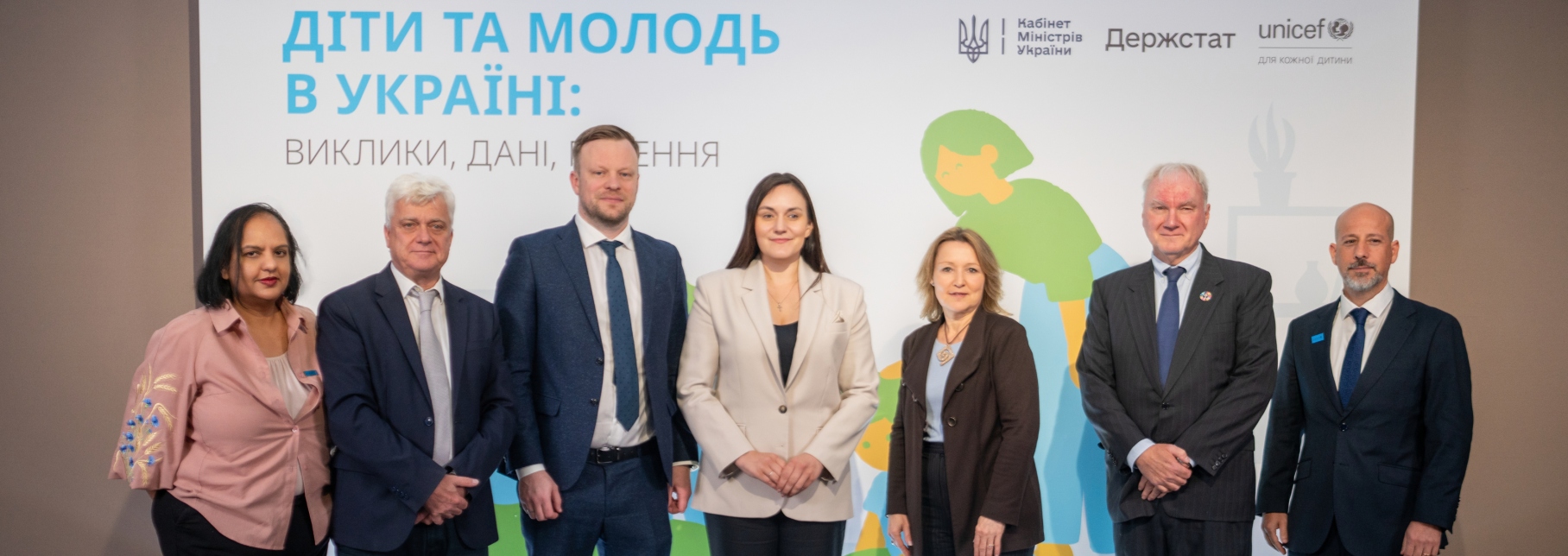
KYIV, 9 October 2026 – Yesterday, the Government of Ukraine and UNICEF hosted senior leaders, diplomats, and partners to discuss the situation of children and young people in Ukraine and the impact of the war.
The briefing and dialogue explored what the most recent data reveal about the lives of children and young people, how needs vary across the country, and how these data can inform current and future policies, programmes, and investment priorities. During the event, the new findings from the latest Multiple Indicator Cluster Survey (MICS) by the State Statistics Service of Ukraine and UNICEF were presented. MICS is the largest household survey conducted in Ukraine during the war, from November 2025 to February 2026. The last one was completed 14 years ago.
“Children's needs must guide Ukraine's recovery priorities: from restoring schools and health facilities to strengthening social services in communities. The MICS findings will help us make better-informed decisions about where investment is most urgent. Together with our partners, we must ensure that these decisions improve children's daily lives and their opportunities for the future.” said Tetiana Berezhna, Deputy Prime Minister of Ukraine for Humanitarian Policy and Minister of Culture of Ukraine.
Despite the pressures of war, maternal and newborn health showed high coverage, with 99 per cent of newborns receiving at least two postnatal care checks within 48-hours after birth. However, exclusive breastfeeding rates, among infants aged 0-6 months, were recorded at only 43 per cent, despite a significant rise from just under 20 per cent in 2012. Progress was also reported in the violent discipline of children at home, dropping from 61 per cent in 2012 to 32 per cent.
At the sub-national level, the data also reveals major differences between regions, rural and urban locations, and socio-economic differences that may not necessarily be reflected in national level indicators. For example, children, aged 3-5 years, attending early childhood education during the survey period ranged from 69 per cent in the west to only 19 per cent closer to the frontlines in the east.
“MICS is an important step towards building an official evidence base of disaggregated household data in Ukraine for policymaking and for stakeholders,” said Arsen Makarchuk, Head of the State Statistics Service of Ukraine. “These findings reflect different aspects of households’ lives and, when considered alongside other sample surveys conducted by the State Statistics Service, complement Ukraine’s official statistics on population and households, helping to build a more comprehensive evidence base for decision-making.”
The dialogue underscored the importance of protecting and strengthening education, health, social protection, water, sanitation, energy, and child-protection services; and directing support towards children and families facing the greatest challenges. As winter approaches, participants discussed how the evidence could help inform decisions and investments so that humanitarian & recovery efforts reach children across Ukraine.
“Evidence shows that it is critical to invest in children and young people, more so during war times. Together, we can ensure a best start in life, better care, access to water and heating, social protection, and learning to earning pathways. UNICEF will continue working with the Government of Ukraine, communities and partners to strengthen systems. We are ensuring that Ukraine’s humanitarian and recovery efforts reach every child.” said Edouard Beigbeder, UNICEF Regional Director for Europe, Central and Western Asia and North Africa.
Note to Editors:
The MICS survey covered nearly 16,200 households, comprising more than 32,600 people and was conducted as part of the 2026 State Statistical Observation Plan, approved by the Cabinet of Ministers of Ukraine. The Ukrainian Centre for Social Reforms carried out the practical implementation and fieldwork, with technical support from UNICEF and funding from the Government of Germany.
Learn more about the MICS findings at https://stat.gov.ua/en/topics/multiple-indicator-cluster-survey-mics